In the past week Microsoft, many major banks, and more have had major outages. Whether from AI slop, hackers finding new exploits, or lowered quality bars in an increasingly competitive economy, this is not a blip. This is going to be the state of affairs for the next few years. The truth is that none of us are ready for the speed at which software moves in 2026 and beyond.
Software go zoom
A long long time ago we used to put software into computers using stacks of hand-punched punch cards. A long time ago we wrote assembly at a terminal so we didn't have to use punch cards anymore. In recent memory we've been relying on progressively higher level programming languages (C -> C++ -> Java / Python / JavaScript / etc) to make programmers faster and better able to express their ideas as code.
We're in the midst of maybe the final revolution in the way software is expressed. I haven't hand-written code in over 12 months, and I'll never go back. I haven't heard a single real software engineer say that they can go back at this point.
I talk to a lot of developers. While the fundamentals of the job is the same (build and ship working software), 70% of their minute to minute tasks look completely different than they did 2 years ago.
I hear about posts on Reddit or discussions about whether "we allow AI here" or not. This is almost silly at this point because for all real software, the era of artisanal handwritten code is over. It's now about agreeing on our operating models, quality bars, and nonfunctional attributes.
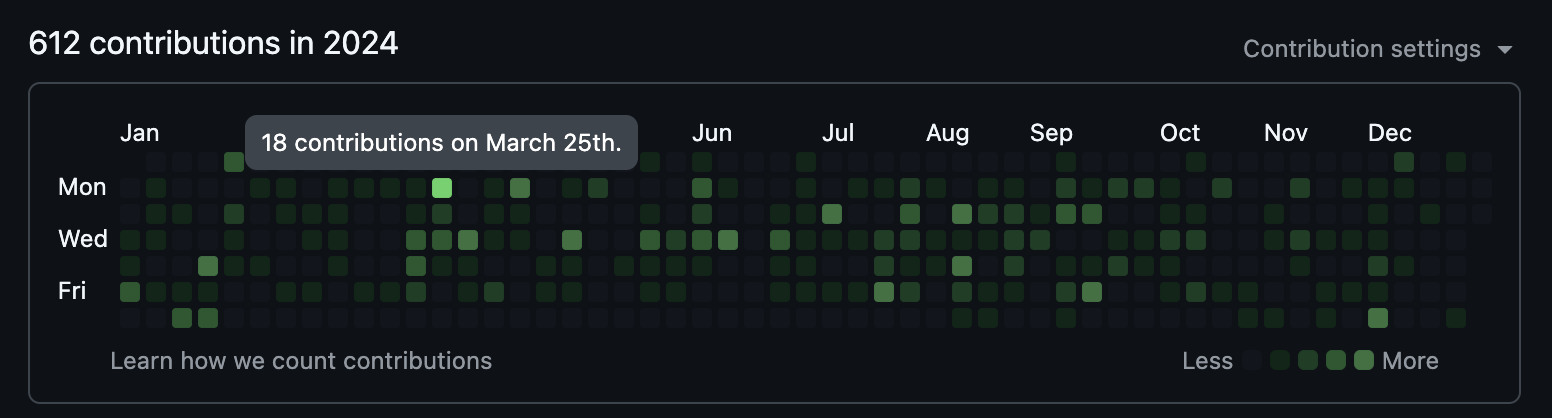
On March 25th of 2024 I had a really good coding day. I landed 18 contributions.
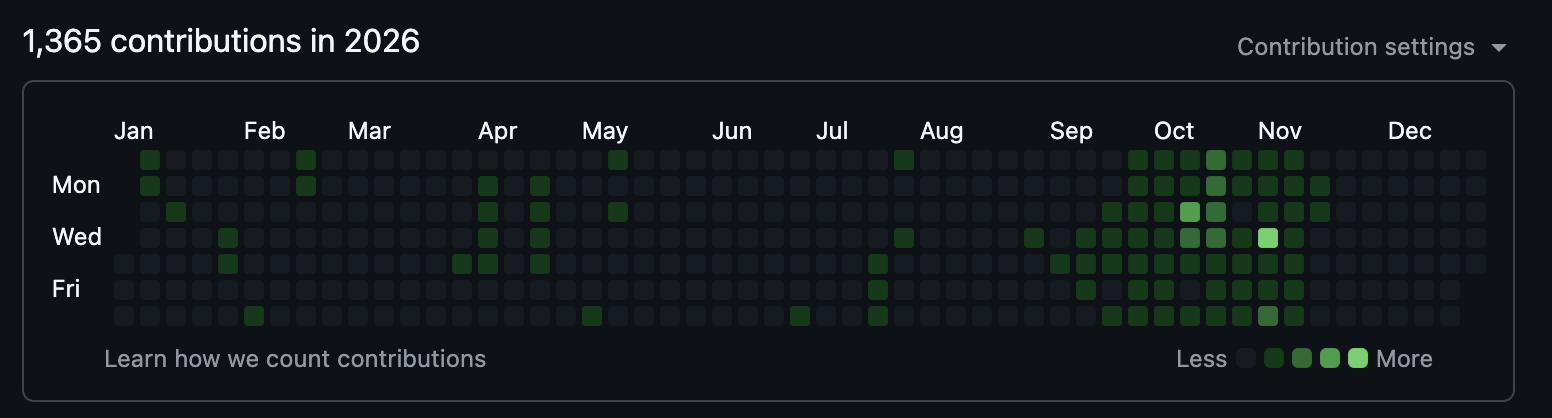
On November 4th, 2026, I landed 163 contributions. The year isn't even done and I've already more than doubled the contributions of any prior year.
The state of slop
You might look at these numbers and say "these are all fake" or "you need more contributions because the code is bad", but I completely disagree. I follow the same thought processes I did back in 2024. I think about the system and what I want it to do, and how it needs to change, and then make the changes. 90% of the time the challenges, the missteps, the mistakes of the LLM are identical to the ones I would have had coding by hand. Especially with platforms like Angular, the code the LLM writes is the same as what I would write if I had unlimited time and energy.
If you are a non-engineer creating and shipping applications today without understanding all of the "ilities" (maintainability, readability, scalability, security, performance, etc), you're probably going to struggle. Your code will have weird edge cases you've never been trained to think about. You won't have a quality bar and you won't be able to hold your system to it.
As an engineer who knows how good code should be structured, I can ask the right questions, demand the right outcomes, and get software that solves my problems beautifully.
This is part of why I joined Buildkite. When code is fast and cheap to produce, making sure the DevOps is taken care of is an even bigger part of your mental burden. Ensuring you can test it fast and well becomes more important than ever.
This isn't the end
I'm a little terrified to say, software is going to keep getting faster. Hackers are going to move faster. Autonomous exploit discovery and exploitation are going to become an everyday occurrence and the idea of relying on obscurity or "regular" monthly or quarterly updates is over. I remember when updating my Ubuntu machine every 6 months was fine. Now we discover more than one new privilege escalation attack every day.
SaaS is in trouble. I've personally taken a web tool covered in ads and paywalls and rebuilt it in an hour with better UX and released it open source.
When I wanted to start making 3d models of my house using drone footage, I didn't even search around to see if there was a good tool available. I just started building my own.
The era of personal software is here. The ilities of the past will eventually be baked into the LLMs and harnesses. The systems will be good enough that everyone will be building (or it will be built for them) the UX and experiences they need in real time. We're closer than any of us think: check out VibeOS.
I don't know what the future holds but having software that does exactly what I need it to do in mere minutes or hours is a revelation, and is going to change the future of humanity faster than we are ready for. I just hope that we don't lose our humanity and our human connections in the process.
Disclaimer
This blog post was written 100% by hand. I think LLMs are still bad at communicating the way I like to. This will likely change soon, but for now, I still expose my soul when I write or talk.